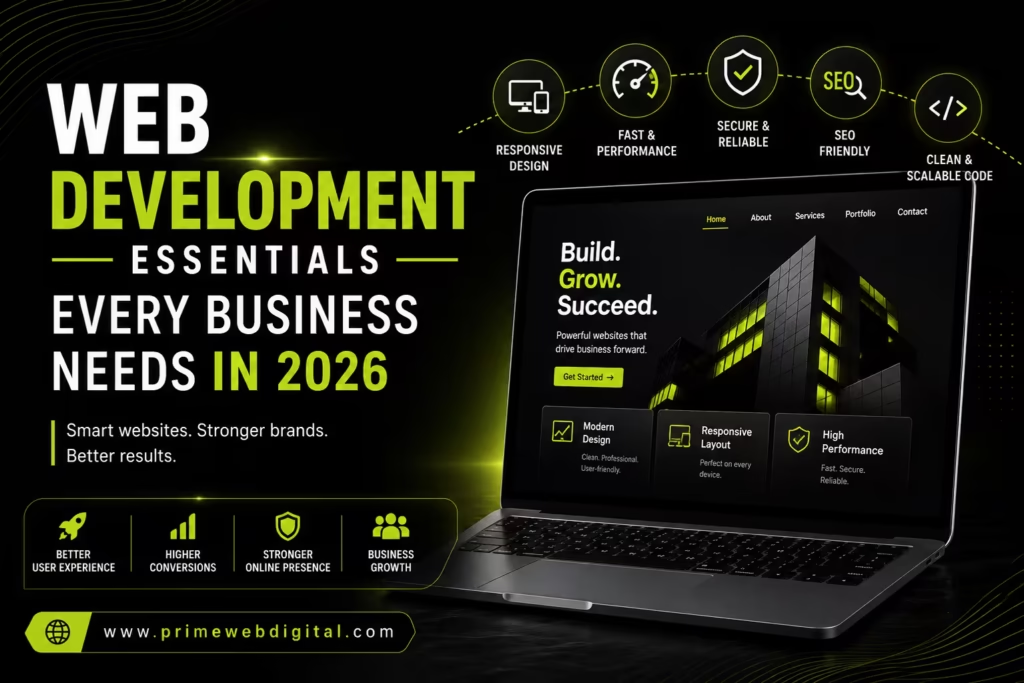
If you run a business today, your website is your first handshake with the world. Before a customer calls you, visits your shop, or sends an email, they check your website. In 2026, this website is not just a digital brochure. It is a working tool that must load fast, answer questions, look great on every phone, and even talk to AI search engines like ChatGPT and Google's AI Overviews.
This guide breaks down the web development essentials every business needs in 2026, explained in simple words so anyone can understand and act on them.
Why Web Development Matters More Than Ever in 2026
Search is changing fast. People no longer just type keywords into Google. They ask full questions to voice assistants, AI chatbots, and search engines that give direct answers. This shift means your website needs three things working together:
- SEO (Search Engine Optimization) – helping Google and Bing find and rank your site
- AEO (Answer Engine Optimization) – making your content easy for AI tools to pick as "the answer"
- GEO (Generative Engine Optimization) – shaping your content so AI chat tools quote and recommend your business
A weak website today does not just lose search ranking. It becomes invisible to AI assistants that millions of people now use for daily research and shopping decisions.

1. Fast Loading Speed
Nobody waits for a slow website. Studies have shown that most visitors leave a site if it takes more than three seconds to load. Speed also affects your SEO ranking directly because Google prefers fast websites.
What businesses need:
- Optimized images (compressed, not oversized)
- Clean code without unnecessary scripts
- A reliable hosting server
- Caching tools that speed up repeat visits
A fast website keeps visitors happy and keeps Google happy too.
2. Mobile-First Design
More than half of all website visits now come from mobile phones. If your site looks broken or hard to use on a phone, you lose customers instantly.
Mobile-first means:
- Buttons and text are easy to tap and read
- Menus work smoothly on small screens
- Pages adjust automatically to any screen size
- No zooming or side-scrolling needed
Google also uses mobile-first indexing, which means it looks at your mobile site first when deciding your ranking.
3. Strong On-Page SEO
SEO is still the base of everything. Without it, your website simply does not show up when people search.
Basic SEO essentials include:
- Clear page titles and meta descriptions with target keywords
- Proper heading structure (H1, H2, H3)
- Keyword-rich but natural content, never stuffed
- Internal links connecting related pages
- Alt text on every image
Good SEO is not about tricking search engines. It is about making your content easy to understand for both humans and machines.
4. AEO – Getting Chosen as "The Answer
AEO is one of the newest and most important shifts in web development. Search engines increasingly show a direct answer box at the top of results, pulled from a single trusted website. Your goal is to become that source.
How to build AEO-friendly pages:
- Answer common customer questions in plain, direct sentences
- Use a clear question-style heading followed by a short, clear answer
- Add FAQ sections on service pages
- Keep answers short first, then explain in detail below
When your content directly answers a question in the first two lines, AI-powered answer boxes are far more likely to pick your business.
5. GEO – Making AI Chat Tools Recommend You
GEO is about optimizing your content so tools like ChatGPT, Gemini, and AI search assistants understand, trust, and quote your business when users ask for recommendations.
GEO best practices:
- Write content in clear, factual, well-structured language
- Use real data, real examples, and original insights instead of copied content
- Keep information updated and accurate
- Structure content with headings, lists, and short paragraphs so AI tools can easily read and summarize it
- Build authority through consistent, trustworthy publishing
AI tools tend to trust websites that are well-organized, factually correct, and updated regularly. Old, thin, or copied content rarely gets recommended.
6. Secure and Reliable Website (HTTPS & Hosting)
Security is no longer optional. A website without HTTPS shows a "not secure" warning that scares visitors away instantly.
Essentials include:
- SSL certificate (HTTPS)
- Regular backups
- Protection against spam and hacking attempts
- Reliable uptime, so your site is always online
A secure website builds trust with customers and search engines alike.
7. Clean and Simple User Experience (UX)
Visitors should never feel confused on your website. A cluttered, slow, or confusing layout pushes people away, no matter how good your product is.
Good UX includes:
- Simple navigation menus
- Clear call-to-action buttons like "Contact Us" or "Get a Quote"
- Easy-to-read fonts and colors
- A logical flow from homepage to contact page
Good design is not about looking fancy. It is about helping visitors find what they need without effort.
8. Quality Content That Solves Problems
Content is still the heart of any website. Every page should answer a real question or solve a real problem your customer has.
Focus on:
- Writing in simple, everyday language
- Explaining benefits clearly, not just features
- Updating old blog posts and pages regularly
- Avoiding copied or duplicate content
Fresh, useful, and honest content performs better across SEO, AEO, and GEO all at once.
9. Structured Data (Schema Markup)
Schema markup is code added behind the scenes that tells search engines exactly what your content means. It helps your business show up with rich results like star ratings, FAQs, and business details directly in search.
Common schema types businesses need:
- Local business schema
- FAQ schema
- Product or service schema
- Review schema
This small technical step makes a big difference in how AI and search engines understand your website.
10. Regular Website Maintenance
A website is not a one-time project. It needs regular updates just like a shop needs cleaning and restocking.
Maintenance checklist:
- Fixing broken links
- Updating plugins and software
- Refreshing outdated content
- Checking website speed and security regularly
Businesses that maintain their websites consistently rank better and build long-term trust with both customers and search engines.

Frequently Asked Questions
1. What is the difference between SEO, AEO, and GEO?
SEO helps your website rank in traditional search engine results. AEO helps your content get picked as the direct answer in answer boxes. GEO helps AI chat tools like ChatGPT recommend your business when users ask questions.
2. Does every business need all three (SEO, AEO, GEO)?
Yes. Search behavior today includes traditional search, voice search, and AI chat tools. Covering all three ensures your business is visible no matter how customers search.
3. How often should a business website be updated?
Small updates should happen monthly, while a full content and design review is recommended every six to twelve months.
4. Is mobile-friendly design really that important?
Yes. Most website visitors now use mobile phones, and search engines rank mobile-friendly websites higher.
Final Thoughts
Web development in 2026 is not just about having a website. It is about building a fast, secure, mobile-friendly platform that speaks the language of search engines, answer boxes, and AI assistants all at once. Businesses that invest in SEO, AEO, and GEO together will always stay one step ahead of competitors who focus on only one.
If your business needs a website that is built with all these essentials in mind, Prime Web Digital can help you design, develop, and optimize a site that performs everywhere it matters.